Pages

Tuesday, January 17, 2006

Honeymoon on the mountain top

Obudu MountainShe was on the team of Protea staff that started the Obudu Ranch Resort, so it came as no surprise when my wife, Tina, suggested this high altitude destination for our honeymoon. The visit would be her third, but for me as a first timer, the experience was out of this world. We secured our reservation by telephone, well ahead of time, and the trip was really something to look forward to.

Obudu MountainWe had set our wedding date to coincide with the Christmas and New Year holidays to enable me make the trip from London to Lagos and then to Enugu. 28 December 2005 was our special day in Enugu. Maybe it was their way of recognising Tina as one of their own, but Rudi and Sandy at the Nike Lake Resort added a Protea touch to our reception that was more than having a little fun. Great guys both. The ceremony was just fabulous. There after, Tina and I set off for Obudu, Cross River for our honeymoon.

It was a difficult journey from Enugu to Obudu through the Abakaliki - Ogoja road, which represents the stack realities of the Nigerian transport situation. Someone was neglecting their job leaving that road in such terrible state of disrepair. We got into Obudu rather late in the evening and could not use the overhead cable cars designed to take visitors up the mountain. Driving from Bottom Hill to the mountain top was a bit scary, especially for a first time visitor like myself. Talk of an uphill task! It would intimidate any inexperienced driver: perfect for a 4x4, but if your car was in any bad shape just forget it!

However, as soon as you've negotiated the numerous hairpin bends (about twenty, or so, of them) on this lonely, single two-way traffic route, you came suddenly into a wonderland that can only be described as out of sight. Yes, Protea Hotel Obudu Ranch Resort is paradise on earth! The blaze of lights that greeted you; the layout and structures of buildings that appeared to jump out of a story book; and people, beautiful people. Amazing! It was impossible to believe that I was still in Nigeria. As we disembarked, I held my wife thinking aloud: Baby, why can't this whole country be like this? She laughed. She knew I felt at home. She was sure I'd enjoy my stay here.

At 1,576m ASL, Obudu Hills is actually part of the Cameroon mountain range. At this time of year (Harmattan season) the weather is just temperate, with the maximum temperature averaging 32°C in the hot months.

click to enlargeObudu is a border town; some six hours drive north-east of Calabar, the capital of Cross River State. It is bounded immediately to the north by Vandeikya in Benue State, and to the east by the Republic of Cameroon. A commuter service takes you from Margaret Ekpo Int'l Airport Calabar to an air strip in Obudu town, from where you can get to the ranch. You may also get to Obudu from Enugu via Abakaliki and Ogoja, or through Gboko and Vandeikya in Benue.

click to play movieIt is only when you get to Obudu town that your journey to the mountain top and Ranch Resort really begins. Cable cars are provided to take visitors from Bottom Hill to the top of the mountain, but alternatively there is always the road: a single-carriage, two-way traffic route that begins as a lonely stretch, before turning into a meandering uphill task!

click to enlargeDriving up the mountain could be quite scary to a first timer. There are about twenty serious hairpin bends that keep the nose of your car high. This will challenge your nerves as well as your driving competence. Although helpful if you're using a 4x4, but don't even try if your jalopy is in any bad shape. Signs are posted along the route to alert you of how much distance you have left to claim your prize.

click to enlargeAnd what a prize! Protea Hotel Ranch Resort is a hidden paradise, and it is fast expanding. This expansion is a joint venture between the Cross River State Government and the Protea Group. Probably because of its location, this resort is being developed as a full-fledged small city. On completion, it'll have its own banks and cash points, an hospital, shopping centre, internet, postal and communication facilities, etc.

click to enlargeDesigned to boost tourism in this part of the world, the effort even includes a bullet and bomb-proof presidential pavilion, complete with its own helipad and staff quarters; a governor's lodge, and a royal suite. A special army garrison is also planned to station close by. Wow! But wait, there's a lot more surprises.

click to enlargeWhether you drive up the hills or arrive by the cable cars, you're welcome to the reception building, which also houses the restaurant and a bar. From here you're taken to your quarters, depending on what type of reservation you made. There are even some unique 'African village' style structures here. Food is served buffet style. Well, if you arrived via the helipad, no doubt, your reception would be a special one.

click to play movieGuided tours are provided for guests here, morning and evening. We rode on the bus, passed a small village market springing up as part of the resort, and then halfway first to the Holy Mountain, the highest peak on this range, and completed the ascent on foot. This peak assumed its name from people visiting the spot for prayers, believing in its spiritual potency. The scenery from here is simply breathtaking! The distant waterfalls is even better observed from here.

click to play movieThen we drove to the Grotto, a rock garden with cold spring water gushing from the rocks. The atmosphere here is very relaxing. We next visited the vegetable farm, from where the restaurant obtains part of its food ingredients; and then the animal farm. Horses and cattle are bred here, and there's a milking factory for Farm Fresh milk and yoghurt. There's also a safari-style Gorilla Village for lovers of wildlife.

click to enlargeSporting facilities are not left out of this arrangement. There are tennis courts, squash courts, a 9 hole golf course, and a large gymnasium for keep fit addicts. Fancy a sport of swimming? Then take a ride in the cable cars to Bottom Hill, and you'll immediately fall in love with its Natural Swimming Pool. Additional facilities are also being planned. You couldn't fail to commend the efforts of those involved in promoting activities here.

Once at Obudu Ranch Resort, time stands still for you. Only when its time to go are you jolted back to reality. Protea is having a little fun; but you need to go plan your next visit, eh!

Sunday, November 13, 2005

Enugu: the more you look?

We grew up in Enugu. We used to regard the place as a unique city. Surrounded by the rolling Udi hills and famous for its coals, the geography of the place and its natural bounty set it out as a special spot with serious economic and tourist potentials. It occupied a special place in our hearts amongst all the cities in Nigeria. As far as we were concerned no city in Nigeria could touch Enugu. Our slogan used to be: "make your money elsewhere, but come to Enugu to enjoy it". We always thought that Enugu was the ultimate place to retire to after one had done his bit in life.

Popularly known as The Coal City, what marks Enugu out is perhaps the people it breeds. The environment conditions the individual, they say; but Enugu was still recovering from the ravages of the Biafra/Nigeria civil war when we were growing up. Most of my childhood friends in those formative years also had what we used to refer to as 'Enugu upbringing'. This meant that you were raised properly. You had inculcated in you some virtues of nobility, including a strong moral character, intellectualism and respect for decency.

However, over the years, as Nigeria's socioeconomic and political climate moved from one 'bad weather' to another, it's not only the citizenry that have been left badly traumatised. The decay in infrastructure from city to city, north to south, west to east, leaves you with terrible psychological hangups. Enugu had more than its fair share of neglect. With the mass exodus of its youths in search of greener pastures elsewhere, this once beautiful city had become a ghost town.

It is against this backdrop that I felt a certain sense of pride when I learnt that Enugu State was awarded the top position in a recent exercise involving all the states in Nigeria, bar Bayelsa. This exercise was a performance rating of all the state governments in the Feral Republic of Nigeria, including the Federal Capital Territory, Abuja. It sought to establish the best performing state in the Federation within certain given criteria.

Following the generalised sorry situation in Nigeria in all areas of governance, this result had sounded too good to be true, especially the parameters and indicators that yielded it. In fact, I regarded it with some suspicion. I needed to get the right balance; another perspective to this that would keep it real. For some strange reason, I felt reassured when I read this article by Ejiofor Nwokolo in the Daily Independence - Enugu: The Limits of Propaganda. If you read this article to the end then you must feel my pain too. Doesn't reality have something in common with the truth? The time is nineteen after four, and this odd clock has many faces. Nothing has really changed.

Wednesday, October 26, 2005

Our right to know

I first read the news of Nigeria's double tragedy last Sunday on the CNN website. As the initial reports could not immediately confirm whether there were any survivors from the crashed flight 210 I turned to the BBC website for more information. I had searched through the local online media and could only find This Day Online scrolling it as Breaking News. At this point the BBC was reporting that about 50% of the passengers had survived the crash. It even mentioned a report of a phone call back home by an ECOWAS official, to confirm that he had been on the flight but had survived the crash. As is usual with the BBC website, it also had provided a forum for those who may be affected by the incident to express themselves.

I read through the many hopes expressed by respondents who had prayed that their loved ones on that fated flight would be alright. By the following morning when the truth of the situation emerged and it became clear that there were no survivors, this page was withdrawn from the website. It was replaced with an article titled: Nigeria - where the truth is hard to find, by Anna Borzello. This article tried to clear the confusion surrounding the conflicting reports, blaming the Nigerian situation for the mix up. The disappointment and frustration that must have followed this development is inestimable, especially for those who may be directly affected by this incident, and who may be without alternative sources of information. It's easy to point fingers elsewhere but the BBC should've provided another forum for readers to express their disappointment or vent their angst.

I was further alarmed when I read that the AIT and Ray Power FM stations were shut down by the Nigerian National Broadcasting Commission, for what they termed "unprofessional coverage" of the scene of the ill-fated flight. Part of their reasons was that the said stations had announced on location, that there were no survivors, before competent authorities had fully assessed the situation; or before the families of the victims had been informed. Haba!

This plane had disappeared from the radar for at least fifteen hours before these announcements were made. Nobody could account for the whereabouts of the aircraft all this while. Two helicopters were scrambled and a frantic search and rescue operation was mounted by the Nigerian authorities. The entire world media was focused on Nigeria and the missing jetliner. Everybody wanted news. AIT happened to be the first to find and reach the crash site; and what the NBC did was to shut the station down for making public its findings. This action underscores the military mentality and ignorance that still rules the Nigerian stage. It is disgusting!

What is wrong with this country, Nigeria? Why must only irrational and ignorant people have access to decision making positions here. Or, is this power-play a deliberate attempt to punish the owners of these stations for getting the birthdate of the tragic first Lady wrong? In fact, Chief Gani Fawehinmi's call for immediate payment of compensations to DAAR Communications Limited is much in order. I also think that the NBC is a useless commission and should be scrapped. The people have a right to know.

Monday, October 24, 2005

Stella

I was up early this morning expecting a call from Humphrey, a friend and classmate, in transit from Port Harcourt to Dallas, Texas. He'd stopped over last night at London Heathrow for a connecting flight. We hoped to meet before he continued his journey later this aftenoon.

As I waited for Humphrey's call my mind wandered to the events of yesterday. It was an ordinary Sunday until Tina, my wife, called me from Lagos to announce that Stella was dead. Before I could say, "Which Stella?", she had added, "It's on CNN". We know a few Stellas but only one could make CNN by her demise. This one was the most important woman in Nigeria. My reaction was nearly the same as when I got the news of Sani Abacha's death years ago. Deja vu? No! Powerful people didn't just die like that. I was like: "Na lie, you must be joking!", and instinctively I reached for my laptop.

While confirming the news on the CNN website my wife was still going on about people's reactions back home. And that's when I saw the real tragedy. There had also been a plane crash somewhere near Lagos and apparently there were fatalities. With over a hundred people on board the plane there was cause for worry. As I mentioned the plane crash to my wife she had stated matter of factly that everybody was in shock.

The CNN reports had been simple and straight forward. Stella Obasanjo, Nigeria's first Lady, was apparently on a private visit to Spain where she went for cosmetic surgeries and had died of complications there of. She would've been 60 in two weeks time, the report said. I thought: could this be the serenade to a heavy birthday party? Aahhh, vanity; thou art treacherous! Though, CNN did not relate the news about the fated airplane to the death of the first Lady, the double tragedy was enough to trouble the Nigerian leader. I turned to the BBC for more information.

Sure enough the BBC report on Stella's death had the expected twist. Among other things, the BBC had pointed out that Stella was a controversial person. They observed that she once had a journalist arrested for doing an article on her in a local newsprint titled, "Greedy Stella". Interesting. But, the BBC plane crash report appeared to conflict with that from CNN. Quoting a Red Cross source CNN wasn't sure there were any survivors. The BBC, at this stage was reporting a 50% survival figure. This is typical of events in Nigeria. Nobody is ever sure of anything! Anyhow the BBC was definite that the airline in trouble, Bellview, was one patronised mainly by foreigners, top Nigerian officials and the wealthy. Big man, Big trouble. Meanwhile, the local www media were dead asleep on all this, except for This Day Online which had it as Breaking News.

Lying in bed this morning, I'm reflecting on recent events in Nigeria. The vice President, Atiku, is being investigated in America by the FBI. Governor Alam goes to a German hospital for tummy tuck (some big man's disease); he is arrested in Britain on charges of money laundering and put to rest in a London jail. He is fighting for his freedom. Meanwhile, his colleagues in office all develop cold feet about travelling abroad. It was always medical checkup, or some such mundane activity. Suddenly they all become very fit and healthy. No more foreign conferences either. The guilty, afraid? Now, Stella, the country's official first Lady goes for surgery in a Spanish hospital; she does not live to see the result. As my neighbour would say, "E be like say Oyibo don do meeting for us o!" If so, who's turn next?

But then, 'even if Oyibo man do meeting for us', borrowing from my neighbour, will the development make Nigerian leaders wake up to the realities of the day? No way. I suspect that Nigerian politicians would prefer to die in foreign hospitals than receive treatment at home. Isn't their their main job to make sure that nothing works in Nigeria so they can continue their looting? Otherwise, why would they not develop and equip our hospitals? While Nigerian doctors and nurses excelled all over world, they are insulted at home. I think it's time to ban everyone who takes public office from going for medical treatment or consultation abroad, including members of their family. How else would our healthcare delivery system get any attention? Ditto for education, if necessary.

The other day a French airliner was lucky to escape a major disaster at Port Harcourt airport, after running into a herd of cattle. A herd of cattle on an airport runway, for crying out loud! Now, the country is again plunged into mourning. May the souls of the faithful departed, through the grace of God, rest in peace.

Wednesday, September 21, 2005

I wonder if Tsunami was a girl too

A little while ago it was Katrina. Now it is Rita! Still reeling from the terrible devastation wrought by hurricane Katrina, Americans prepare for hurricane Rita. I began to wonder if there was some bias to the naming of nature's greatest storms. Why would this natural phenomena that practically destroyed a beautiful city like New Orleans be named after a woman? Do people who bear names associated with such natural disasters that take heavy tolls on humankind object to being so named? For answers I took a dive online and googled "hurricane". In micro-seconds I had more information than I could handle. How the world has changed!

I found FEMA's info site for kids on hurricanes - http://www.fema.gov/kids/hurr.htm most interesting. A complete site, and it did my curiosity justice. Among other things, it dealt with the history of hurricanes and the how and why they were given names, including who did the naming. There was a long list of names given to hurricanes from 1996 - 2007. I thought I might find my name on that list. Hey, I did!

I began to relax though when I noticed a good balance between male and female names for hurricanes. But then, because I couldn't go into individual details I couldn't immediately tell who, or which, did the most severe damage. And then again you couldn't associate certain names with a particular gender. So, hurricane Chris or Sam could be male or female. But Katrina is definitely female. Mercy, Rita!

I'll go for Tony Wilson: New Orleans music makes you happy. Take heart people, as you rebuild.

Q. What do hurricanes and women have in common?
A. They're both wet and wild when they come, and they take the house and car when they leave.

Saturday, August 27, 2005

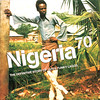
NIGERIA 70 COMPILATION

NIGERIA 70 COMPILATION
NIGERIA 70 COMPILATION,
originally uploaded by alternativa.
How times change! Who could have imagined that at some point men actually walked the streets of Nigeria dressed up like this? Would anyone now look at those 'layers' with some nostalgia? I wouldn't bet on it.
Methinks it would be a tricky affair, because the slightest breeze might not just cause a serious embarassment to any regular 'bobo' but much damage is possible to today's very hungry Nigerian.

I go die o!
Nigerians have a great sense of humour too. Yes, a good joke makes my day anyday. And so when I got this one recently from Agari Mojo, Okpoka NdiIgbo, I decided to blog it here.

In the Classroom in Warri:

Teacher: You Boy, spell plantain

Boy: Whish one? The ripe one or the unripe one?

Teacher: What difference does it make? Just spell plantain!

Boy: Teasha, If you fry the ripe one na 'DODO', if you fry the unripe
one na 'SHIPS' if you roast am, na 'BOLI', all of them na plantain,
so whish one you wan make I spell?!
----------------------

Have you heard the latest?

Cameroun is going to attack Nigeria as soon as they've learnt to drive the septic tanks they bought from the French!

Monday, July 18, 2005

London: Scary Encounter on the DLR

The journey from Lewisham Station to Cross Harbour takes less than 10 minutes on the Docklands Light Railway (DLR), but yesterday evening, my journey appeared to take a life time.

Lewisham Station, a terminal for DLR trains going from here to either Bank Station or Stratford, is usually not so busy at this hour. I got on the train and made my way towards the front of the first coach. A moment later I was joined by a young man (white) and his girl friend (also white). Two other passengers came in to occupy the train driver's seat and then a girl (black) took up a position on the seat next to that one.

Suddenly a man (black) in his mid 50s staggered into the train. He sat on the seat opposite me and the white couple. I recognised him immediately. On my way to the Station, I had noticed this character disengaging himself from a small group of drunks (whites), as I walked through a small park. They drew my attention because they were quite loud as they bid their 'friend' good bye.

As the man sat down he began to chatter in a loud voice, to no one in particular, about nothing of particular interest. Though he wore no dreadlocks, his accent betrayed his Carribean ethnic origin. Everybody ignored him. The couple on the train driver's seat got up immediately and disappeared towards the rear of the coach. I
thought, "do I move too, or do I stay and put up with this drunk?" I stayed.

Now the drunk began to address the couple sitting by me. I got the impression this guy defered to white people. Forced himself on them rather.

"You look like John Lenon", he said.

Perhaps more out of respect, the other guy replied,

"That's what people say".

This scene had nothing to do with me, so I looked away. Staring into space, I tried to make myself as small as possible so no one would notice me. That was my mistake.

The drunk turned on me. I'm not able to recall exactly what he'd said, but he'd expected me to react. I boned up. I wasn't getting involved in this. To the white boy he said,

"I love John Lenon".

Then he began to rave:

"You see why black people shoot each other?"
"Black people don't support one another!"
"You see, you're a white boy, you show me respect"
"But see this black man, he no show me no respect"
"That is why I carry a gun in my bag!"

"I shoot you, you're dead"

"Bang! Bang!", he shot me.

No, I didn't drop dead. Not yet. It was an air pistol.

But my heart skipped a beat when he reached for his bag. Is this fool going to try and shoot me, or what? This was the worst kind of pest! People who couldn't carry their booze well. The scum of the earth. To be this drunk so early in the evening. To try and turn me into a victim of his sorry world. I didn't trust this guy at all.

But wait, what if the man really had a gun in that bag? Can one just suddenly lose his life like that? For nothing? I braced myself. To take a bullet?

Ha!

An ordinary encounter about to suddenly turn nasty?! As the man continued to rave, weird thoughts ran through my mind. I tried to coil myself so I could go at him head first. Would my bag get in the way? Can I move fast enough? I concentrated on his hands. And his bag. This was serious. I wasn't smiling at all.

"Your face too long", complained the man.
"African boy", "you don't deserve to live!"

He was standing up now.

"Bang! Bang!", he shot me again. Air pistol.

The train began to stop. Deptford Bridge Station. The man began to leave the train. As he left, he continued to abuse and call me names. I never said a word to him. Kept my face blank. The rest of the passengers still showed no interest in this one-man demo.

The man got off the train, looked through the window at me, and drew his air pistol for the finisher.

"Bang! Bang! Bang!", he went.

The train moved on. Phew! That was close.

I struggled to comprehend the intensity of this man's emotion. I wondered what could've been the outcome of this encounter if the man had got a real gun in his bag. I was so sure he could've used it. Or tried to. He was almost foaming at the mouth as he cursed and abused me.

I began to reflect. Some of what the man had said to me went beyond drunkeness. His monologue had betrayed some deep seated ill-feeling against me, and my kind. To be confronted with this scenario less than two weeks after the terror bombs of the London transport system left me aghast. Apparently al-Qaeda isn't the only threat one has to contend with in this society.

Why is the world so full of hate? What makes people think they are the ones who deserve to live while others deserve to die, and at their hands? Do humans really enjoy killing one another? Why? So many questions, so few answers.

But I'll ride the DLR again. Scum and all.

Thursday, July 14, 2005

London Terror: The other side

One week after the London terror bombings, I was watching the news of the solidarity rally by Londoners at Trafalgar Square on TV when this text message arrived from Agari Mojo:
Since they announced some financial compensation 4 d bomb victims Naija names on d list has increased. Na wa o!

Do we run true to type, or do we? The humour in the message wasn't lost on me.

But, seriously, if this many Nigerians were caught up in this tragedy it does reveal something quite ominous. It would suggest that the population of Nigerians who have fled the tyranny at home to settle here and try to make a living, is indeed great. They face a new threat now.

Globalization. No, this has nothing to do with the challenges of international trade or economic neo-colonisation by super-multinational outfits. I am talking about the shifting battlegrounds of mass murder.

These Nigerians had felt safe here. They had fled the suffocating economic environment back home to come here. They had fled police brutality and state sponsored assasinations. They had fled ethnic violence and religious bigotry. They ran away from hunger and disease; only to end up victims of international terror.

What has happened to our world? Not that it has ever known peace. But must we allow things to continue this way? What is wrong with tackling the causes of terrorism instead of its consequences?

Sunday, July 10, 2005

Guest Author: Chinweizu on Negrophobia

Black Renaissance Tracts: No.l
Copyright © 1994 by Chinweizu
A Sundoor Publication, P. 0. Box 988, Festac Town, Lagos, Nigeria
_____________________________________

On Negrophobia: Psychoneurotic obstacles to Black autonomy
(or Why I just love Michael Jackson)
by
Chinweizu

michael jackson before and after
Negrophobia, the fear and dislike of blacks, is a great disease. It has killed more blacks in the last five hundred years than all other diseases combined: more than malaria, more than epidemics and plagues of all sorts, In the coming years, it could kill far more than AIDS. It is a psychological disease, a disease of the mind, which harvests dead black bodies every day.

The blacks who died through slavery were killed by negrophobia. The blacks who died all over the globe from white colonial aggression were killed by negrophobia. The blacks who died in our liberation struggles —Bookman, Toussaint and Dessalines with all their soldiers in Haiti; the Mau Mau warriors in Kenya; the liberation fighters in Angola, Mozambique, Guinea-Bissau, Zimbabwe, Namibia, South Africa, Sudan and elsewhere — were all killed by negrophobia.

The blacks dying from the structures and policies of neocolonialism are dying from negrophobia. The blacks killed by AIDS, a disease manufactured by whites in the biological warfare labs of the USA and deliberately introduced into central Africa and Haiti to kill off blacks, are dying of negrophobia.

Ah, Negrophobia, I didn't know that hate could kill so many!

Negrophobia is a psychoneurosis, a mental disorder. So too is blancophilia, its twin. If someone hates everything black, including the black butterfly, including the most fertile black soil, isn't he mentally disturbed? If someone loves everything white, including white trash, including white arsenic, isn't he mentally disturbed? Negrophobia and blancophilia form a syndrome, a characteristic set of psychoneurotic passions that occur together.

The negrophobia syndrome is characterised by melanotropism. a magnetic movement away from or toward different intensities of melanin, the skin pigment. Blancophilia induces a reflex movement toward things white, even toward white ugliness. The stimulus object is white skin, any skin that is low in melanin.

Negrophobia, for its part, induces a reflex movement away from things black, even from black beauty. The stimulus object is black skin, any skin blessed with melanin in high dosage.

Negrophobia and blancophilia are, of course, conditioned responses to white power and black powerlessness. In a sad case of stimulus substitution, the responses to superior power have become transferred to white skin, and those to powerlessness have become transferred to black skin. The negrophobia syndrome is a chronic disease with the white race, a disease born of pride of power. It is a disease with which they have infected the whole world, including the black race, giving rise to negro negrophobia, the disease of black self-hate.

Negro negrophobia is a most absurd disease. Can you imagine some black running to escape his blackness? To escape from himself? His obsession with fleeing from himself proves he is unfit to live. His running to embrace his white enemy proves he is a suicide. The entire affair shows he is mad. Some call it alienation, a mental disorder. Yet some black sirens now sing in praise of alienation, beckoning all blacks to acquire the disease.

What are the symptoms of negro negrophobia? Negro negrophobia makes black women bleach, till some proudly sport yellow monkey faces and ebony-black thighs. (or ‘Fanta Orange face and Coca-cola legs’ as some call it). It makes black parents prefer their lighter skinned children to the darker skinned. It makes blacks who marry white or mulatto think they are marrying up and improving the race. It makes a pitch-black Sudanese proclaim himself Arab, on account of just one white Arab ancestor ten generations back; it makes him count as nothing, indeed as a blemish, all his 1023 black ancestors in that generation, and all the millions before and since.

Negro negrophobia makes African-Americans, and now black South Africans too, believe that integrating white neigbourhoods is social advancement. It makes blacks desperate to integrate white schools, white churches, white communities, white ideologies, white movements and white organizations. Some would even gladly die to integrate the Ku Klux Klan.

Negro Negrophobia makes blacks defer to whites. It makes bright black boys, the thinkers of the race, obey the IMF, the World Bank, GATT and the UN, even when they know that the orders from such outfits are aimed to destroy their own people. It makes black intellectuals swallow and spout any silly idea, provided it is put forth by some guru of the white world, like Marx, like Jesus, like Mohammed.

Negro negrophobia makes blacks accept leaders of thought and of action that are chosen for them by whites. It makes blacks revere any third class mind, any tinpot potentate, that whites annoint to confuse and mislead them. But for negro negrophobia, we would automatically reject any leader chosen for us by our historic enemies. But for negro negrophobia, we would thoroughly suspect the loyalty to the black race of any black Rhodes Scholar, of any black Nobel lureate, of any black Faisal laureate, of any black Lenin laureate, of any black knight or peer of England, of any black elect of the French Academy. He would have to work extra hard to convince us that he is not an agent sent to help hasten our ruin.

Believing the blancophile dogma that white is right, that white is quick-witted, that white is beauty and virtue and salvation; believing the negrophobe dogma that black is wrong, that black is dumb, that black is ugliness and sin and damnation, the negrophobic black does not feel comfortable in a blacks-only group. Blacks-only associations give him claustrophobia; he must throw open the doors to let in some white skin to boss or spy on him; only then can he relax; only then can he feel that all is well with his world. Negro negrophobia is, thus, a disease which drives blacks to crave racial integration and to espouse continentalist Pan-Africanism.

In multi-racial societies, it drives the black elites to flee to white suburbs. In the name of racial equality, they decapitate their own black communities, rob the ghetto of black leadership, and abandon it to confusion and predatory gangs, In the name of black freedom they flee from the black world. Similarly, in international relations, pulled by the call of the white, blacks are eager to join a British Commonwealth. They are desperate to join a French Community. They sell their sanity to join a Russian Collective. And an Arab empire? They disown their black inheritance to get into its latrine! They will pay any price, suffer any humiliation, to join any club formed by whites. But a black community, or commonwealth, or league? They will not only not join, they will oppose its being formed at all! The idea of blacks getting together, all by themselves, disorganizes their being. In their blancophilia they are self-made orphans desperately seeking white foster homes. For all their outcry on behalf of the black community, all they want is to disappear into the whiteness of the white world, whether Arab or European. They want to disappear by any means possible or available — physically, mentally, emotionally.

In such ways, negro negrophobia has affected Pan-Africanism, affected Negritude, affected even the great leaders of these Black Redemption Movements. Senghor's Francophilia weakened his Negritude; made him ecstatic to join the "Universal Civilization" by becoming an elect of the French Academy.

Nkrumah's Arabophilia subverted the Garveyism of his Black Star symbol; it truncated his Pan-Negro Pan-Africanism into a continentalist Pan-Africanism which would exclude Garvey from membership of its organizations, and which distorted Pan-Africanism into an Arab and Black African tango.

With Du Bois, when the racial integrationism of his NAACP triumphed, it wrecked the black community in the USA; it bore the bitter fruit of black ghettos whose absentee black leaders squat in white suburbia, squawking as hostages to white power.

Cheikh Anta Diop's Marxism, with its dedication to the primacy of multi-racial class solidarity, made him most unenthusiastic about a sub-Sahara Federation of Black Africa. He would accept it only as a very last resort, only if the Arab invader-settlers doggedly excluded themselves.

Mandela's liberalism, with its dedication to the primacy of multi-racialism, is allset to subvert the cardinal goal of returning to the black aborigines of South Africa all the land stolen from them by the white invader-settlers.

Senghor, Nkrumah, Du Bois, Cheikh Anta Diop and Mandela are proof that not even the best among us are immune from the negrophobia syndrome. Of the great black redeemers of the 20th century, only Garvey escaped the syndrome, principally because he was unequivocal and uncompromising on black solidarity. Significantly, he did not call his movement Pan-Africanism, with all the equivocation on race that is harboured by that term; he called it the United Negro Improvement Association, a name which unequivocally implies a redemption movement of blacks, by blacks, for blacks.

To call yourself a leader of blacks, one leading them to liberation from the white world, and yet run off to integrate white suburbia— isn't that absurd? It can only mean that your Black Consciousness is shallow, or even opportunistic; that hiding under your black mask is a blancophile heart. To call yourself a leader of blacks, one leading them out of the prison cell of white power, and yet insist on bringing whites into every organization for blacks — isn't that folly of the first order? Those blacks who espouse continentalist Pan-Africanism, are they not like those Trojans who carried the Greek wooden horse into their own citadel, and hastened their people's destruction?

If you are such a black leader or intellectual, take a look at Michael Jackson and see the incarnation of your spirit, see your mind made flesh. Michael Jackson has most publicly done what black negrophobiacs secretly dream of doing: act out George Schuyler's great satire Black No More! Michael Jackson is the supreme, public example of negro negrophobia, which is why he is such a valuable negative example, which is why I just love Michael Jackson. Every racially integrating black, every continentalist Pan-Africanist black, is Michael Jackson minus opportunity. They are the social and political counterparts of Wacko Jacko, as the white press dubbed him. The only difference is that he has carried his negro negrophobia to its logical, physical conclusion — turn himself into a fake white man! Because the others cannot afford the cash or courage for the skin and bone surgery, they settle for the next best thing: they disappear into white communities, or integrate into white ideologies and white movements. Presumably, from seeing so many white faces around them at all times, they will lose sight of the fact that they themselves are black.

After being created and entrenched by five centuries of white power, Negro negrophobia has, alas, become a character neurosis. From one generation to another, black parents pass on to their children the neurotic character structures which foster negrophobic attitudes and behaviour. The global mechanisms of white power (religion, media, school, advertising, propaganda) then reinforce the neurosis.
Blacks, alas, cannot take control of the Black World until they are cured of this neurotic syndrome. Until they get rid of this neurotic plague, any white boy or girl or child can seize control of their affairs by flashing a bit of white skin. Proof? All you need do is introduce a white face among negrophobic blacks and they become disorganised, they become disoriented. Just put one ugly blondie among them, and their eyes will stray and their minds will wander from the doughnut before them and focus on the white hole. Some will be obsessed with desire for whitey; some will be obsessed with hate for whitey; either way, they lose touch with basic reality and ignore what they must do to keep control of their lives, their situation, their environment. And at that point, any white waif can take them over.

What then is the cure? That is for our medical and social scientists to investigate. But from the sidelines, let me observe that it may require psychotherapy, both individual and group therapy. It may require cultural therapy, with basic retraining to break the habits of the negrophobic syndrome and inculcate non-negrophobic habits of thought and valuation. It would be the job of homes, schools, media, and social organisations to bring up new generations untainted with Negrophobia and blancophilia. It may require, above all, environmental therapy of a political sort, through the emergence of at least one powerful black nation that would destroy the five-century -old correlation of white skin with power and black skin with powerlessness. That is probably the strategic cure for the syndrome.

My guess is that until the power therapy for this power neurosis is accomplished, all other therapies would be only partially effective. Whatever the case, until the race cures itself of negrophobia, it has no future. Which is why getting rid of Negro negrophobia is perhaps the cardinal task of internal reparation.

Black Renaissance Tracts: No.l

-------------------------------
Please feel free to comment on and fwd this information to any Pan-African persons, or to publish and reproduce to the Pan-African community, provided you credit the author, do not alter descriptive terms, change any words or otherwise mutilate the piece without written agreement.
If posted at a website, please email a copy of the web page to sundoor777@hyperia.com
For print media use, please obtain prior written permission, and then send two (2) copies of the publication wherein used, to Chinweizu, P. O. Box 988, Festac Town, Lagos, Nigeria.
For further information please contact Chinweizu

All rights reserved.

© Chinweizu 2005

Saturday, July 09, 2005

Guest Author: Chinweizu - Nija Titanic

A super-sized slave ship called Nija Titanic, built by Goldie & Lugard Shipyard, was packed full of chained Niggers who had been captured for enslavement on the IMF plantations across the ocean. Admiral Al Capone, alias Tatt [Traitor-at-the-Top] and his crew of Ali-Baba gangsters had a secret deal with the ship owners that the Nija Titanic was, under no circumstances, to offload its cargo of captives or cast overboard the fabulous treasures in its bottom holds. Though hailed as "unsinkable", the Nija Titanic, while in mid-ocean, hit an iceberg and began taking in water through gaping holes below its waterline. But amazingly, for several days nobody on board noticed a thing. The Admiral and his crew were too busy playing kalo-kalo in the casino hall, collecting billion dollar chips to be cashed when they stepped ashore. There was no pilot on board. No lookouts had been posted, the ship’s radar was unmanned, contact with weather stations and position finders had been lost when the ship’s radio communication system fell into disrepair. All the money-addicted crew had been too obsessed with their casino game to do their appointed jobs. So the crew had no way of knowing the doomed condition the ship was in.

When, at last, someone noticed that the ship had stopped moving, the Admiral denied that anything was wrong with the ship, and called a staff meeting of 400 of his most trusted henchmen to discuss, not how to evacuate the stricken ship [it carried no lifeboats] and save the people on board, but how to rearrange the seats in the casino hall, the seats in the banquet hall and the chairs on the deck. When someone was foolish enough to raise the issue of evacuation, the Admiral angrily declared that evacuation was out of the question. The Nija Titanic was unsinkable and all must remain on board; and anyone who raised the issue again would be tried and shot for alarmism and mutiny. And all his crew, amazingly, complied. Meanwhile the stricken ship continued to take in water. And sharks and all manner of sea monsters began to gather and circle the doomed ship, waiting for a lavish feast on the soon-to-be-drowned multitude.

After their staff confab, Admiral Al Capone and his 400 henchmen retired to their fabulous suites, dreaming of the life of abundance they would enjoy for ever after. But suddenly, there was a mighty shaking as an explosion in the fuel tanks rocked the ship, the lowest levels of the ship flooded furiously and the ship began to keel over. Before long the stricken ship upended, and everything that was unbolted to floor or wall came tumbling down. Panic everywhere as the ship broke into several pieces which began to sink to the depths of the ocean. Admiral Al Capone could not believe what was happening, he tried to make frantic phone calls to shore for a helicopter to come and whisk him to safety, but when none came (the long unserviced phone system was dead, and his desperate calls went nowhere) he fell on his knees and bawled out a teraful prayer. But his god was too busy elsewhere to listen or come rescue him. And he and all his comprador crew, and all the hapless captives on board went down with the "usinkable" Nija Titanic.

Chinweizu
Lagos,
March 1, 2005
===================================

Some Questions for Young Nigerians to ponder

Do the passengers on the Nija Titanic wish to go down with the ship, down to the bottom of the sea? Or to the IMF plantation to be enslaved for ever, without possibility of release?

What is the destination preferred by the captives on the doomed ship of the Nigerian State?

When, and in what condition do they want to arrive at their preferred destination?

What predictable dangers await them in the 21st century?

Is the Nigerian state equipped to evade or defeat these dangers?

What is a state? – Is Nigeria not a failed state, waiting to implode?

What should the Nigerian state do or not do to/for its citizens?

What are the key features of the global environment in which the Nigerian state will operate in the 21st century and beyond?

What are the vital interests of the Nigerian population?

What are the global strategic conditions for defending and advancing those interests?

What is national security, as distinct from state security or the security of the state apparatus and its officials?

What is democracy? And how can it be institutionally entrenched?

What kind of democracy, if any, will help the Nigerian population to control the Nigerian state, to survive and permanently end their enslavement, impoverishment and humiliation by others?

What use to the people is a state or a democracy if its character is to disorganize, and destroy society?

What are the challenges of the 21st century and beyond?

What kind of state or political system is most likely to help the Nigerian population to survive the dangers and challenges of their near future?

What are the nature, causes and remedies for the anarchy in Nigeria?

Can the Lugardian state, which was constructed, from the very start, as an armed bureau of internal plunder and repression and to programmed to enslave and exploit the Nigerian population for the benefit of foreign interests; can it be trusted to change its own character out of sheer goodwill? [bearing in mind Frederik Douglas’ statement that “power concedes nothing without a demand”]

Can the Lugardian state apparatus, no matter how reconfigured, solve the problems that need to be solved for the Nigerian population to survive the 21st century? Can a whale ever swim the desert? Or a camel walk the ocean? Or an elephant fly?

If this Lugardian contraption that is programmed to suppress, exploit, massacre and terrorize the Nigerian population [Aba women1929; Enugu coal miners 1949; Lagos, Kalakuta 1977 & 1978; Talata-Mafara farmers (a.k.a Bakalori) 1980; Odi villagers 1999, Zaki-Biam villagers 2001; etc]—if this Lugardian contraption is not dismantled and dumped on Lugard’s grave, can the Nigerian population invent and institute a state that will serve, defend and advance their own interests?

Will rearranging the deck chairs on the Titanic prevent it from sinking?

What went wrong with Nigerian Independence, starting from 1945 or even earlier?

By what measures can office holders in Nigeria be obliged to abide by their oaths of office? Here is a Persian example from the 6th century BC:

Otanes' chair

Otanes' father Sisamnes had been put to death by Cambyses [King of Persia]: he was one of the royal judges, and as a punishment for taking a bribe and perverting justice Cambyses had him flayed; all his skin was torn off and cut into strips, and the strips stretched across the seat of the chair which he used to sit on in Court. Cambyses then appointed his son to be judge in his place, and told him not to forget what his chair was made of, when he gave his judgements.”
--Herodotus, The Histories,Bk 5; ch 25

Major massacres of Nigerians

by the army and police of the Nigerian Lugardian State, sine 1920, i.e. after the initial bloody conquest and pacification ended ca. 1918, and its rule had become instituted, assured and presumably “non-violent.”

1929: Women’s anti-tax protest (a.k.a Aba women’s riot) in the Owerri and Calabar provinces of Southern Nigeria was suppressed with 55 women killed.

1949, Nov 18: Shooting of coal miners in Iva Valley, Enugu,

1977: Soldiers burn down Fela’s Kalakuta following his boycott of Festac 77.

1978: the military Govt of Lagos State demolish Fela’s Kalakuta, while he was away at the Berlin Jazz Festival

1980: Farmers in Talata-Mafara, Sokoto State, massacred following protests against Impresit Bakalori, an Italian Company.

1980s: Students at ABU, Zaria, and OAU, Ife killed by police

1999, Nov.: soldiers, deployed to the Niger Delta to protect the oil companies from citizens outraged by the devastation of their environment, sack Odi village, Bayelsa State, killing hundreds.

2001, Oct: Zaki-Biam, Benue State sacked by army, with more than 200 killed

Chinweizu
Lagos
May 15, 2005

-----------------------------------
2005, June 7th: Apo Village, Abuja - the slaughter continues as the Nigerian Police laid waste 5 Igbo traders plus 1 Esan girl returning from a party, and branded them armed robbers.
-----------------------------------

Please feel free to comment on and fwd this information to any Pan-African persons, or to publish and reproduce to the Pan-African community, provided you credit the author, do not alter descriptive terms, change any words or otherwise mutilate the piece without written agreement.
If posted at a website, please email a copy of the web page to sundoor777@hyperia.com
For print media use, please obtain prior written permission, and then send two (2) copies of the publication wherein used, to Chinweizu, P. O. Box 988, Festac Town, Lagos, Nigeria.
For further information please contact Chinweizu

All rights reserved.

© Chinweizu 2005